
Framework: Socially Engaged Design Process Model

Socially Engaged Design is human(ity) centered – not just user centered. We consider broad contexts through an equity-centered lens that impact the practice of engineering, including social, cultural, political, economic, and environmental factors that can completely change the design of solutions. Further, we push designers to analyze how their own identities and cultural context shape their approach.
The above video, made for the Innovation in Action program at the University of Michigan’s Center for Socially Engaged Design, describes the details of the model.
More information can be found at:
https://csed.engin.umich.edu/socially-engaged-design-process-model/
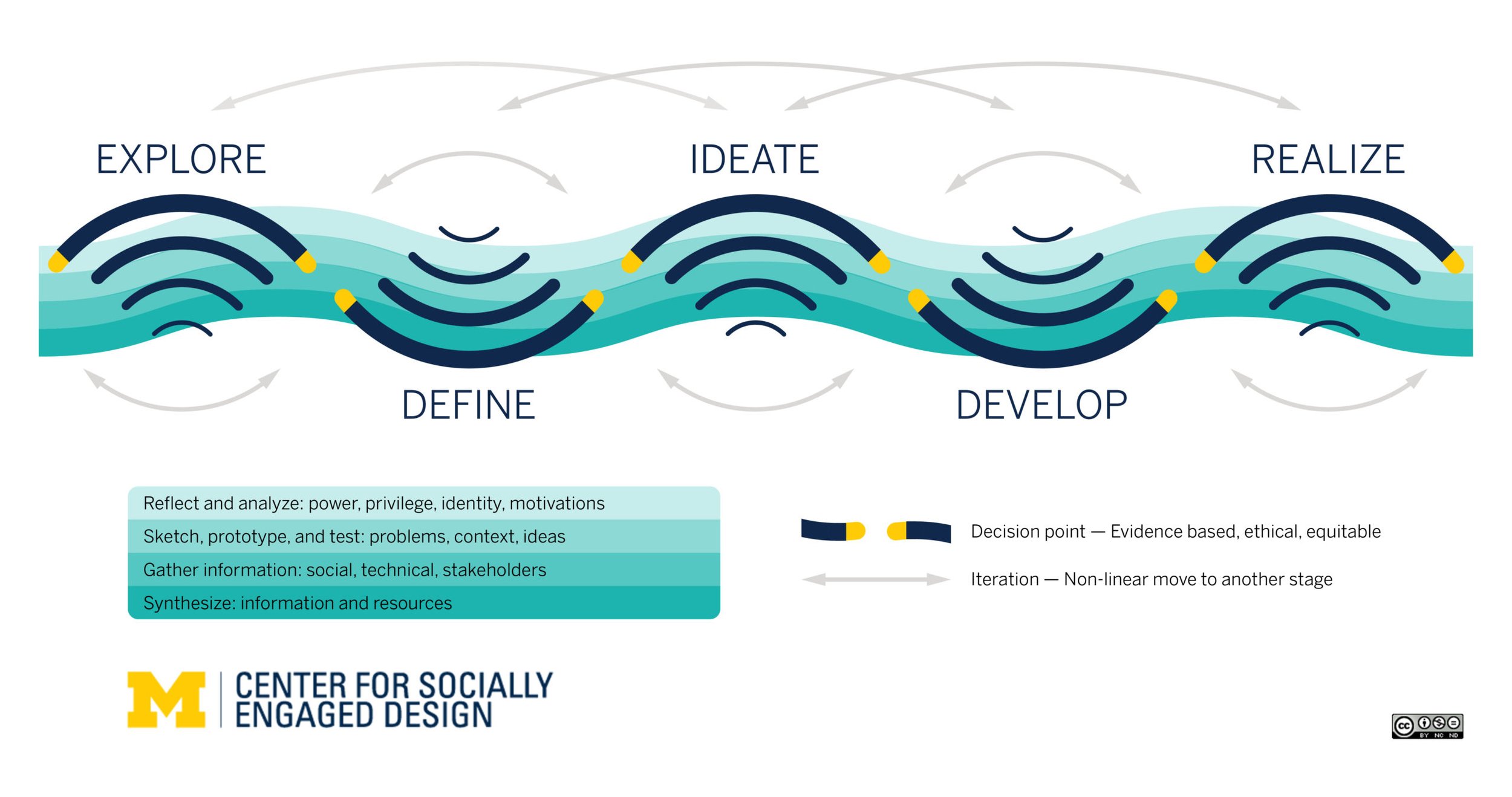
While similar to other design process models that describe a designer’s journey and steps through a process, the socially engaged design process model integrates social and technical aspects of design into one cohesive diagram. Like many process models, it has stages (explore, define, ideate, develop, and realize) and arrows between these stages that represent the ability to iterate and jump between. A unique element in this model is what we call the undercurrents, visualized as a teal wave that runs beneath the five stages. The undercurrents represent things that designers should be engaging in throughout their process. Uniquely, “analyzing identity, power, privilege, and motivations” is right at the top. The socially engaged design model, unlike many others traditionally used in human centered design and technology design processes, asks teams of designers to constantly analyze their own biases and assumptions in addition to where those biases and assumptions come from with regards to the identities, powers, and privileges they hold in society.
The socially engaged design process model was authored by myself and three colleagues (Steve Skerlos, Shanna Daly, and Ann Verhey-Henke) in the summer of 2020 out of a need to have a clear and articulated design model to describe the philosophy of socially engaged design to an audience of primarily undergraduate students.
This work is licensed under a Creative Commons Attribution-NonCommercial-NoDerivatives 4.0 International License